When is China–Europe rail freight still worth it as ocean rates fall?
Published October 11, 2026 · Sino-Euro Railway
Falling ocean rates do not remove the value of China–Europe rail freight for every shipment. Industrial parts needed for a confirmed deadline, steady-selling goods facing a replenishment gap and some goods tying up substantial capital may still warrant assessment. The decision depends on whether a verified improvement in delivery can justify the additional door-to-door cost.
Original AI-generated editorial illustration of the trade-off between cost and delivery time; not a photograph of a news event.
Lower ocean rates change the starting point
Drewry's assessment dated 8 October 2026 put the Shanghai–Rotterdam spot rate at USD 3,337 per 40ft container, down 2% from the previous week. This is a market assessment for a specified route, container size and date. It is not a company quotation or an all-in door-to-door price. Source: Drewry World Container Index, assessment of 8 October 2026.
A lower ocean rate makes the rail premium more relevant, but freight charges alone do not determine the best choice. Ocean may suit flexible deadlines; an order exposed to identifiable losses from late arrival needs a broader comparison. The figure above is a sourced fact; the following assessment is conditional business analysis.
Cargo profiles worth assessing for rail
- Industrial parts with a confirmed use date. Ordinary components for production, maintenance or a project may affect subsequent work if they arrive late. Check bookable rail departures, onward arrangements in Europe and receiving dates before assessing whether rail reduces that risk. A product description alone does not establish urgency.
- Steady-selling goods with a replenishment gap. Compare stock on hand, inbound shipments and confirmed demand. If ocean delivery would follow stock depletion and the available rail service could bridge the gap, assess switching a critical batch. Unconfirmed sales forecasts should not be treated as certain stockout losses.
- Goods with significant capital tied up in transit. A shorter journey may reduce financing costs, but high cargo value alone is insufficient. Verify the time improvement along the actual transport chain, including loading, connections, clearance and final delivery.
Each case depends on cargo characteristics, packaging, route and carrier acceptance. The FCL and LCL rail freight service information provides context for assessing a suitable shipment.
Compare equivalent costs before valuing time
Use the same origin, delivery address, cargo readiness, quantity and service scope. A port-to-port ocean rate cannot be compared directly with a door-to-door rail offer. The door-to-door delivery information helps define the transport stages being assessed.
- Identify collection, origin handling, international transport, destination handling and final delivery.
- State whether customs brokerage, duties and taxes, and any applicable inspection or storage charges are included, excluded or settled as incurred.
- Confirm container size, container arrangements, quotation validity and charging rules.
For COC, confirm that container provision is included in the offer. For SOC, verify the shipment's actual container rental or use charges and period separately. The guide to COC, SOC and quotation inclusions supports checking the scope.
The planning question is whether the additional rail cost is below the reasonably estimated financing savings plus the reduction in expected stockout or delay losses.
A simplified estimate of financing savings is: cargo value × the business's actual annual financing cost rate × verified reduction in capital tie-up days ÷ 365.
Use the business's own assumptions and establish that the period really shortens. Cargo value itself is not the saving. Allow for the probability of disruption and avoid counting the same loss under inventory costs, lost sales and contractual losses. Where evidence is incomplete, use a reasonable range. This is a planning framework, not a universal quotation algorithm.
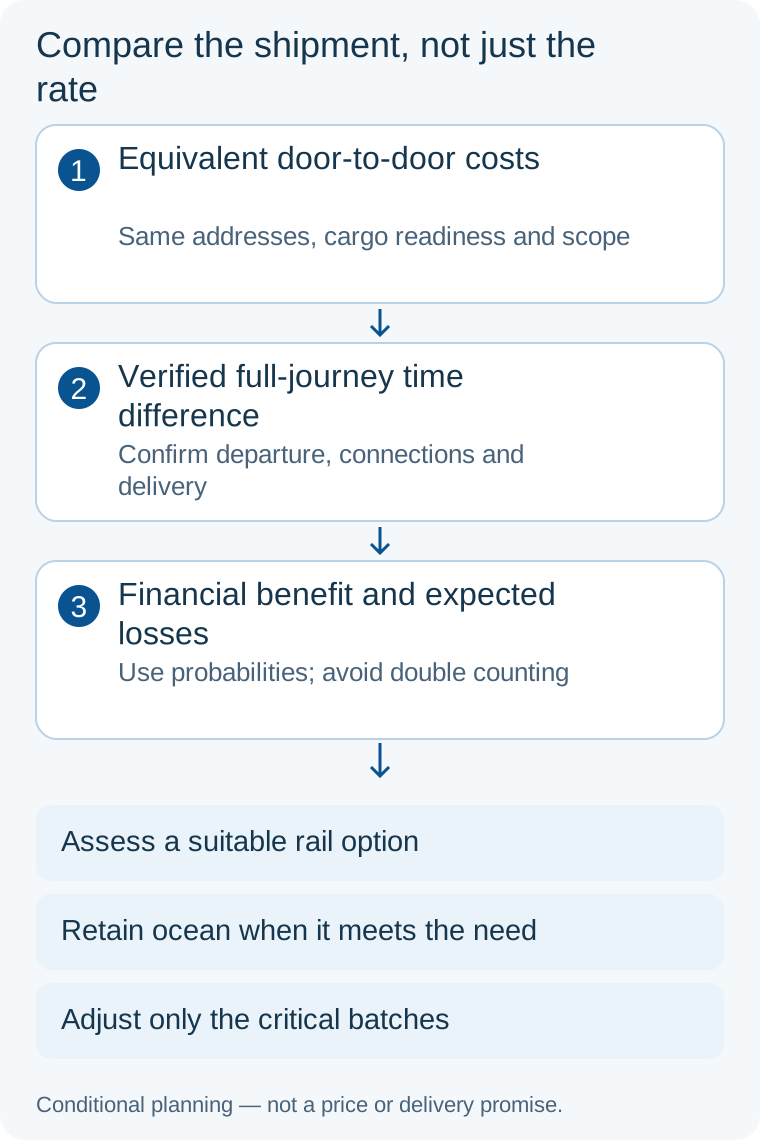
Original decision diagram: assess rail, retain ocean or adjust only critical batches according to verified costs and delivery value. It is not a quotation or delivery guarantee.
When ocean remains appropriate
Cargo with ample lead time, lower unit value or an achievable ocean arrival date may favour cost control. If rail offers no meaningful door-to-door improvement, or extra handling and storage absorb the benefit, switching may not help. Rail departures, border connections and European delivery arrangements also require confirmation; a main-haul duration is not a door-to-door commitment.
Planning for the coming month
If ocean offers remain competitive, prioritising urgent, critical batches while retaining ocean for routine volumes may make sense. This is conditional analysis. Reassess when valid quotations, sailing schedules or bookable rail capacity change. A smaller verified time advantage also reduces rail's potential value.
Frequently asked questions
Does rail still suit general cargo after ocean rates fall?
Assess orders with a clear delivery benefit, accepted cargo conditions and a verified improvement across the complete journey. The product name alone is insufficient.
How can the extra rail cost be justified?
Compare equivalent door-to-door costs, then estimate financing savings and expected stockout or delay losses. Account for probabilities and avoid double counting.
Can only part of a shipment move by rail?
Assess the critical quantity, separate packaging, documentation, actual split-shipment costs and bookable capacity. Splitting is not automatically cheaper or feasible.
For an order-specific comparison, provide the origin, European delivery postcode, goods, packaging, weight, volume, readiness date and latest acceptable arrival, plus the actual impact of delay.
Analysis based on information available on 11 October 2026. The market assessment cited above is dated 8 October 2026; its source page changes over time. No universal rail price or fixed door-to-door transit is offered here.
Need rail freight from China to Europe?
Share your route, cargo and ready date. We will confirm the rate, included charges, validity and transit estimate for your shipment.